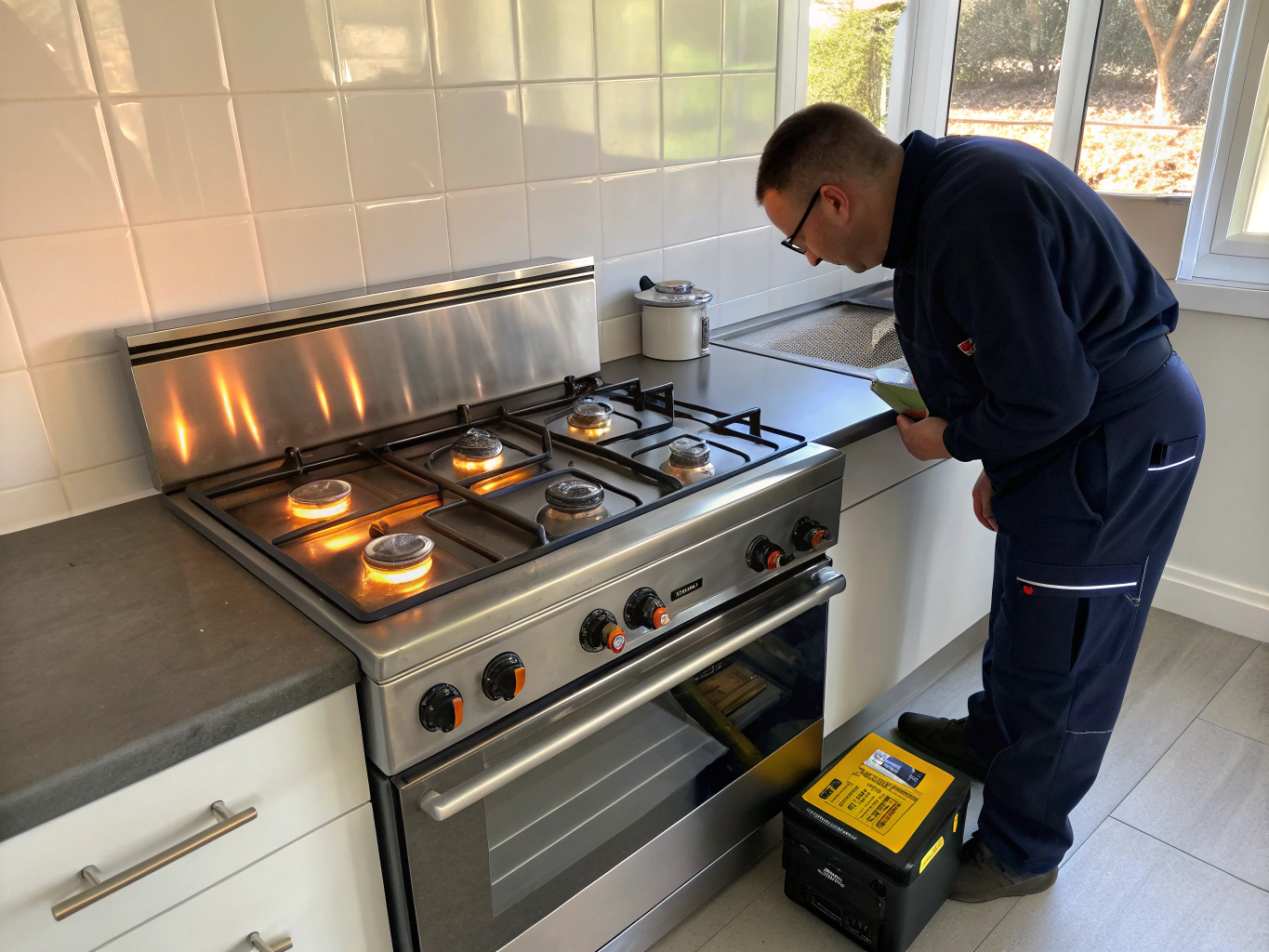
 Need commercial oven uneven baking in Duluth, GA? Duluth Appliance Repair delivers fast, licensed commercial oven uneven baking with upfront pricing and same-day availability. Call (470) 847-9076 to schedule your commercial oven uneven baking today.
Commercial Oven Uneven Baking Temperature Repair
What it looks like
Commercial oven bakes unevenly with hot and cold spots, temperature varies within oven cavity.
Why it happens
Faulty temperature sensor, broken heating elements, poor air circulation, damaged thermostats, insulation gaps.
What you can check yourself
Place oven thermometer in multiple locations, verify heating elements glow evenly, check for gaps around door and seals.
What a technician will do
Technician will replace temperature sensors, heating elements, or repair airflow baffles and inspect insulation.
How urgent is it?
HIGH PRIORITY: Product quality and consistency at risk. Repair within 24 hours.
Local service note
Duluth/Gwinnett County commercial oven repair: heating element and sensor replacement available.
Overview
In a commercial oven, even temperature distribution is critical for consistent baking results. Modern ovens use multiple heating elements—typically top and bottom—controlled by temperature sensors (thermistors) that feed data to the control board. Air circulation is managed by fans or convection baffles, which evenly distribute heat throughout the cavity. When a sensor fails or an element burns out, the oven may develop hot zones where the temperature is higher than the set point, while other areas remain cooler. Insulation gaps or a warped door seal can also allow heat to escape, creating cold spots. Over time, repeated temperature fluctuations can stress the oven’s components, leading to further reliability issues. Understanding how these parts interact helps pinpoint why an oven is baking unevenly and guides effective repairs.
Step-by-step repair guide
- Safety First: Disconnect power and allow the oven to cool completely. 2. Thermometer Test: Place calibrated oven thermometers on the top rack, middle rack, and bottom rack. Record temperatures after the oven reaches the set point. 3. Visual Inspection of Heating Elements: Open the oven cavity and inspect the top and bottom heating elements for discoloration, cracks, or broken coils. Use a multimeter to check continuity; replace any element that fails the test. 4. Sensor Evaluation: Locate the temperature sensor(s) (usually near the oven wall). Remove and test resistance with an ohmmeter at room temperature and at a known hot temperature; compare readings to manufacturer specifications. Replace faulty sensors. 5. Airflow Assessment: Examine convection fans and baffles for debris or damage. Clean any buildup and ensure the fan spins freely. Adjust or replace baffles if they are warped or broken. 6. Door Seal and Insulation Check: Inspect the door gasket for gaps, tears, or compression loss. Replace the gasket if compromised. Look for missing or damaged insulation panels inside the oven cavity and reinstall or replace as needed. 7. Reassembly and Calibration: Reinstall all components, reconnect power, and run a calibration cycle using the oven’s built‑in self‑test or a professional calibration tool. Verify that temperature readings across the cavity now fall within a 5‑10°F variance. 8. Final Test Bake: Perform a test bake with a standard product (e.g., a batch of cookies) and use the oven thermometers to confirm uniform baking. Document results for the client.
Cost and timeline
Temperature sensor replacement typically costs $100–$150 per sensor, including labor. Heating element replacement ranges from $150–$300 per element, depending on brand and part availability. A full diagnostic and repair visit usually takes 2–3 hours. Most commercial ovens can be back in service the same day if parts are on hand; otherwise, schedule a follow‑up within 24–48 hours for part ordering.
Prevention and maintenance
To keep your commercial oven baking evenly, schedule quarterly temperature verification using an external oven thermometer. Clean and inspect convection fans and airflow baffles monthly to prevent debris buildup. Perform an annual visual inspection of door gaskets and replace any that show wear or compression loss. Include sensor calibration in your routine maintenance checklist, and replace sensors every 5–7 years or sooner if they fail diagnostic tests. Keeping vents and insulation intact will maintain consistent heat distribution and extend the life of heating elements.
Need this fixed in Duluth?
Same-day appointments across Duluth and nearby. Written quote before any work starts.
Call (470) 847-9076Frequently asked questions
Why is my oven temperature uneven?
Uneven temperature is usually caused by a faulty temperature sensor, a burned‑out heating element, poor airflow due to blocked baffles, or insulation gaps that let heat escape.
How do I test oven temperature myself?
Place calibrated oven thermometers in several locations (top, middle, bottom) and compare their readings after the oven reaches the set temperature. Significant differences indicate a problem.
How often should temperature sensors be replaced?
Sensors typically last 5–7 years in commercial use, but they should be inspected during annual maintenance. Replace them immediately if they show inconsistent readings or fail continuity tests.
Can I continue using the oven with one heating element out?
Operating with a single element can cause uneven baking and may overwork the remaining element, leading to premature failure. It’s best to shut down the oven and schedule repairs promptly.
What maintenance can prevent uneven baking?
Regularly clean convection fans and baffles, check door seals for wear, and perform quarterly temperature checks with an external thermometer.
Commercial Oven Uneven Baking: Common Questions in Duluth, GA
Based in Duluth, we also handle appliance repair across Duluth, GA and the surrounding service areas, so trusted help is always close by when you need it.
Why is my commercial oven uneven baking?
Usually commercial oven uneven baking points to a worn part, a failed sensor, or a loose electrical connection inside the range. In addition, built-up debris, a clogged line, or a tired motor can make the problem worse over time. Because several parts can share the blame, a licensed technician tests each one in order before replacing anything, which saves you from paying for guesswork.
How urgent is the problem?
Generally the range may still run for a while, yet the fault can quietly signal an electrical issue, a slow leak, or a part that is about to fail completely. Therefore we recommend limiting use until a technician inspects it in person. Moreover, prompt service usually keeps a small, inexpensive fault from spreading into a much costlier repair.
Can I fix commercial oven uneven baking myself?
A few basic checks are safe to try first, such as confirming the power supply, resetting the unit, and clearing any visible debris you can reach. However, when the issue continues after those steps, the fault is almost always internal. At that point a licensed Duluth technician with the right diagnostic tools is the safe, lasting choice.
How much does the repair cost?
Because the exact cause varies from one unit to the next, we confirm pricing only after a hands-on diagnosis. Generally a targeted part replacement costs far less than buying a brand-new range. Moreover, we always give you a clear, upfront estimate before any work begins, so there are never surprise fees on the final bill.
How soon can you repair commercial oven uneven baking in Duluth?
Besides offering upfront pricing, we keep same-day and next-day appointment slots open across Duluth and the wider Gwinnett County area. Consequently, most repairs are finished on the very first visit without a second trip. Simply call (470) 847-9076 and our team will schedule a licensed technician at a time that works for you.
For more on energy-efficient appliance use and care, see the U.S. Department of Energy guidance at ENERGY STAR.